Sourcing Yoga Outfits in 2026 takes more than choosing a soft fabric and a flattering color. Buyers need to examine stretch recovery, opacity, seam strength, and how each garment feels after repeated washing. Vivienne Westwood’s well-known advice, “Buy less, choose well, make it last,” offers a useful sourcing principle. It shifts attention from seasonal buzz to garments customers will actually wear. A squat test under bright light can reveal transparency that a studio photo hides. Small checks matter.
Start with a clear product brief. Specify fabric composition, weight, fit, size range, target price, and performance needs before requesting samples. Ask suppliers for test results and traceable information about materials and production. Certifications may help, but verify their scope and current validity rather than relying on a logo. Compare samples after movement and washing, not just straight from the package. Keep notes. A smooth waistband can still roll during a long flow.
This guide explores how to assess manufacturers, compare fabrics, request samples, and weigh minimum order quantities against quality and cost. It also considers recycled fibers, lead times, and supply-chain transparency without treating any single claim as proof of sustainability. Trade-offs remain: a fabric may feel cool but pill quickly, or recover well while costing more. That deserves honest review. The best Yoga Outfits are not automatically the cheapest or the most technical. They fit the intended practice, meet clearly defined standards, and deliver consistent quality customers can trust.
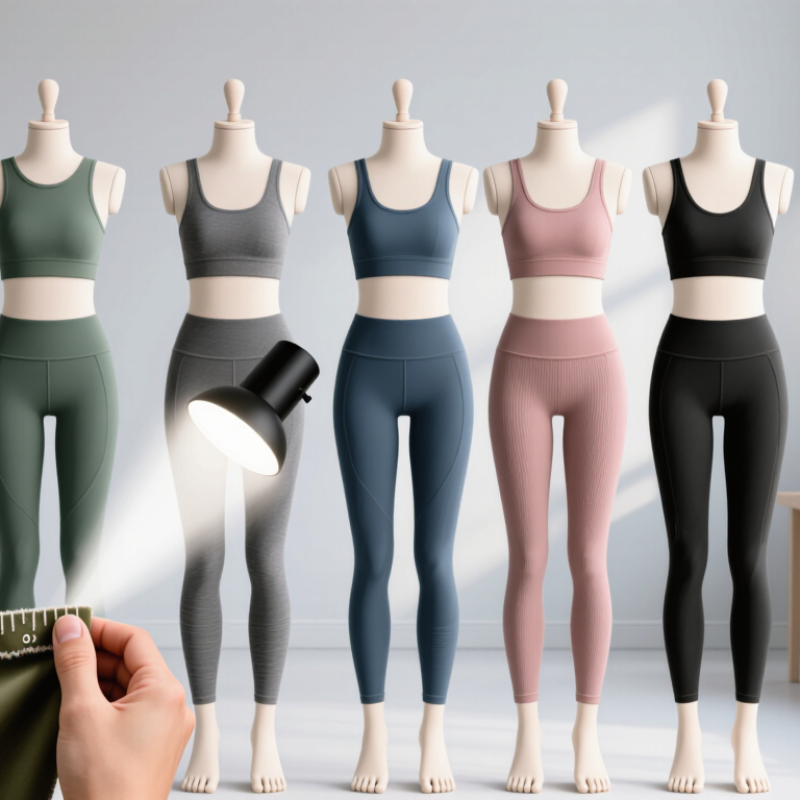
Before choosing fabrics or factories, define who will wear the garments and where they will practice. A heated studio calls for quick-drying fabric and secure waistbands; outdoor classes may need light layering and UV-conscious design. Fit comes first. Specify intended movement, coverage, size range, price point, and care expectations. Ask whether customers prefer compression or a softer feel, then test both with real movement. A deep squat reveals more than a product photo.
Market data can guide research, but it should not replace it. McKinsey’s 2024 Future of Wellness survey found that 82% of US consumers considered wellness a top or important priority. That is a broad wellness signal, not proof of yoga-clothing demand. Yoga Journal and Yoga Alliance reported 36.7 million US yoga practitioners in their 2016 Yoga in America study; 28% had started within the prior year. The figures are useful context, not a current market forecast. Segment customers by practice habits and buying needs, then interview a small group before setting quantities. Record where seams rub, which waistbands roll, and whether fabric turns sheer under studio lighting. Test, then revise. A sample may look polished on a hanger and still fail in motion.
Reliable sourcing begins with a clear product brief: fabric weight, stretch recovery, opacity, seam construction, size range, and target cost. Supplier directories, industry referrals, and apparel trade fairs can help you find potential manufacturers. Treat every listing as a lead, not proof. Ask whether the contact owns the factory or brokers orders. Request a recent video of cutting tables and finished-garment inspections. Useful, but not conclusive.
Check the supplier’s business details, production capacity, quality procedures, and experience with activewear. Ask for two customer references and contact them with specific questions about delivery and defect rates. If a supplier shares certificates, verify the issuer, scope, and dates. Samples matter. Wear-test each sample during movement, then check opacity under bright light and seams after washing. A fabric that feels soft on a desk may behave differently in a deep stretch.
Before a large order, agree on a written specification and approve a pre-production sample. Define acceptable measurements, color standards, packaging, inspection steps, and remedies for defects. Consider an independent inspection before shipment, especially when the factory is new to you. A small pilot order can reveal delays or inconsistent sizing. It costs more per unit, admittedly. I have seen buyers focus so hard on price that they overlook communication; that is an easy mistake, and one worth revisiting.
Identify reliable sourcing channels and potential suppliers by starting with the materials used in performance apparel.
Polyester accounted for approximately 57% of global fiber production in 2023, compared with about 22% for cotton. These global figures are not specific to yoga apparel, but they help frame material discussions with mills and garment suppliers. Ask prospective suppliers for verifiable fiber documentation, fabric performance-test results, minimum order quantities, lead times, and traceability information.
Source: Textile Exchange, Materials Market Report 2024. Shares are approximate.
When sourcing yoga outfits, assess the fabric before judging its appearance. A nylon-elastane blend often feels smooth and offers close support, while polyester blends may dry quickly. Neither is automatically better. Feel the fabric. Check whether it stretches in four directions and returns to shape without feeling stiff. For a quick test, bend, reach overhead, and hold a squat. Watch for a waistband that rolls or fabric that turns sheer under tension. Small details matter: flat seams can reduce rubbing, and a gusset may allow easier movement.
Fit depends on the practice and the wearer, so avoid relying on size labels alone. Ask suppliers for garment measurements, fabric weight, and shrinkage results after washing. A sample should be washed and worn before a larger order; one test is useful, but it cannot predict every body or routine. Sustainability claims need the same care. Request clear information about fiber content, recycled-material percentages, and where production steps occur. Look for credible documentation rather than broad words such as “green.” Durability counts too: a garment that pills after a few washes may need replacing sooner. I still find this difficult to compare across suppliers, especially when testing methods differ, so record the conditions and results rather than trusting a single claim.
A yoga set can look flawless on a sample rack and still fail after repeated wear. Check fabric performance on production samples: stretch recovery, seam strength, opacity during deep bends, colorfastness, and pilling after washing. Request dated test reports from an independent laboratory, and confirm that the tested fabric matches the bulk order. Textile Exchange’s Materials Market Report 2024 estimates global fiber production reached 124 million tonnes in 2023. That scale makes traceable material records more useful than broad sustainability claims.
Verify each certificate against the issuing body’s database, facility name, validity dates, and product scope. A certificate for one site or material does not automatically cover every garment. Ask suppliers for recent inspection records, a quality-control plan, and corrective-action examples. The paperwork may look tidy. The stitching still needs checking. A small pilot order can reveal skipped stitches, uneven waistbands, or fabric that turns sheer under tension.
Capacity needs evidence, too. Request current monthly output, production-line allocation, peak-season utilization, and lead times for fabric, cutting, sewing, and finishing. Compare those figures with your forecast, then confirm who handles subcontracted work. Visit the facility when practical, or use a qualified third-party audit. Capacity figures are estimates, not promises; I would leave room for delays, even when the factory’s spreadsheet looks reassuring.
When sourcing yoga outfits in 2026, compare the full delivered cost, not just the unit price. Ask suppliers to list fabric, stitching, labels, samples, freight, and inspection fees separately. A low quote can change once custom colors or size labels are added. Request prices at several quantities, such as 100, 300, and 800 pieces. This reveals where unit costs improve and where they level off. Confirm which charges are excluded, since delivery routes and quoted terms can vary.
Minimum orders need careful checking. Find out whether the MOQ applies per style, color, or size range; a 300-piece order may mean 300 pieces in every color. Ask for a sample before approving bulk production, and compare its fabric weight, stretch recovery, seams, and opacity with the written specifications. For delivery, get production time and transit time as separate estimates. Clarify when the production clock starts, whether partial shipments are possible, and how delays are handled. Dates can slip.
Tips: Put every quote in one comparison sheet, including payment milestones and delivery terms. Keep a small buffer for delays, but avoid ordering extra stock without a clear demand estimate. A neat spreadsheet can still hide assumptions.
| Sourcing option | Indicative unit price (USD) | Typical minimum order | Production or dispatch time | Delivery terms to confirm | Best suited for |
|---|---|---|---|---|---|
| Ready-stock wholesale | $12–$35 per two-piece set | Often 1–50 sets, depending on the seller and styles selected | Usually dispatches within 1–7 business days when stock is available | Confirm stock by size and color, shipping cost, dispatch location, and return rules. Transit time depends on destination and shipping method. | Small test orders, fast launches, and buyers who do not need custom labels or designs |
| Private label using an existing design | $10–$25 per two-piece set | Commonly around 100–500 sets per style or color | Typically 30–60 days after sample approval and order confirmation | Ask whether the quote is EXW, FOB, or another Incoterm; confirm packaging, export charges, freight, duties, and who arranges transport. | Brands seeking custom labels or packaging without developing a new garment pattern |
| Custom cut-and-sew production | $12–$30+ per two-piece set | Often 300–1,000+ sets per style, with requirements varying by fabric and factory | Typically 45–90 days after materials, specifications, and samples are approved | Confirm fabric sourcing, sample and revision charges, inspection arrangements, production milestones, Incoterm, and freight responsibility. | Distinctive fits, fabric choices, colorways, and larger planned orders |
| Print-on-demand or made-to-order | $20–$45 per set, before any applicable shipping or taxes | Often 1 set per order; product and customization options vary | Production commonly takes 3–10 business days before shipment | Check the production location, delivery estimates by destination, tracking availability, return policy, and whether shipping is charged per item. | Low-inventory testing, small collections, and designs that need no bulk production run |
Price, minimum-order, and timing figures are indicative planning ranges for a two-piece yoga outfit, not supplier quotations. Actual terms vary with fabric, garment construction, order quantity, customization, destination, and season. Request a written quote, approved sample, size specifications, and delivery schedule before placing an order.
Specify fabric weight, stretch recovery, opacity, seam construction, size range, and target cost. Clear details reduce misunderstandings.
Ask whether the contact owns the factory or brokers orders. Request a recent video showing cutting tables and finished-garment inspections. Treat listings as leads, not proof.
Wear it during movement. Check opacity under bright light, seam strength after washing, and stretch recovery during deep bends. Samples can mislead.
Request dated, independent test reports and confirm they match the bulk fabric. Check each certificate’s issuer, facility, dates, and product scope. Paperwork is not enough.
It can reveal delays, skipped stitches, uneven waistbands, or inconsistent sizing before a larger order. It costs more per unit, admittedly.
Define measurements, color standards, packaging, inspection steps, and remedies for defects. Approve a pre-production sample before bulk manufacturing begins.
Request current monthly output, line allocation, peak-season use, and lead times for fabric, cutting, sewing, and finishing. Compare these figures with your forecast.
Consider one before shipment, especially with a new factory. Confirm who handles subcontracted work. Leave room for delays; reassuring spreadsheets are not promises.
Sourcing the best Yoga Outfits in 2026 starts with a clear understanding of your target customers and their needs. Consider the activities they practice, preferred styles, fit expectations, and budget before choosing products. Then explore suitable sourcing channels and compare potential suppliers based on their experience, communication, and ability to meet your requirements.
Assess each option for fabric comfort, stretch, durability, fit, and performance, while considering responsible material choices. Before placing an order, verify product quality, relevant certifications, and the supplier’s production capacity. Finally, compare pricing, minimum order quantities, and delivery terms to understand the full cost and timeline. A careful review of these factors can help you make informed sourcing decisions and select Yoga Outfits that suit your market.