Choosing the right Yoga Apparel manufacturer involves more than comparing prices or browsing polished product photos. Global buyers need partners who can deliver consistent fit, dependable communication, and clear production details. A soft pair of leggings may look convincing online, yet fabric recovery, seam strength, and opacity matter during real movement. Small details show up quickly.
This guide introduces manufacturers for different sourcing needs, from private-label collections to custom designs and larger production runs. It considers product range, fabric options, sample development, minimum order quantities, quality checks, and lead-time communication. Buyers should ask how suppliers test stretch fabrics, inspect stitching, and handle changes between samples and bulk orders. Specific answers are more useful than broad promises. Still, no supplier is perfect for every brand. A factory suited to a large seasonal order may not fit a small label testing its first collection. That trade-off deserves a closer look.
Use the profiles as a starting point, not a substitute for due diligence. Request current samples, confirm specifications in writing, and compare the finished garments against your own requirements. Ask who oversees inspections and how concerns are documented. These steps can reveal gaps before production begins. They take time. The right manufacturing relationship is built through evidence, careful questions, and realistic expectations—not a catalog alone.
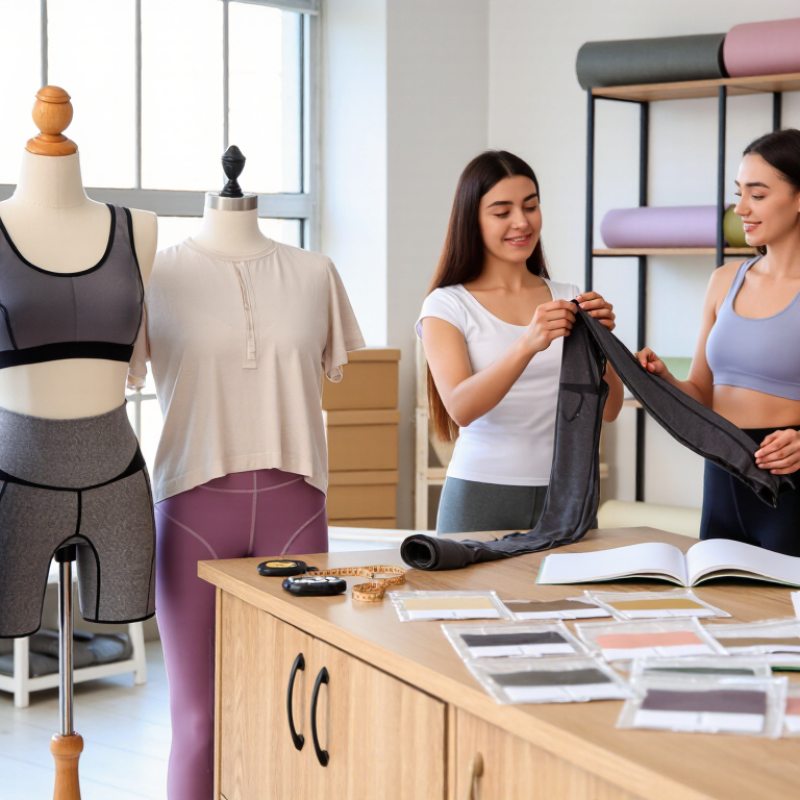
Market Context: Sports Apparel Reached $203.3B in 2023 (Grand View Research)
Top Yoga Apparel Manufacturers for Global Buyers
Market Context: Sports Apparel Reached $203.3B in 2023
Grand View Research valued the global sports apparel market at USD 203.3 billion in 2023. This figure covers far more than yoga clothing, including products for many sports and activities. That scale matters. It signals a large, competitive market, but it does not tell buyers which yoga styles will sell or which factory can deliver consistent quality.
For global buyers, manufacturer selection should begin with product evidence, not broad market enthusiasm. Check fabric recovery after stretching, opacity under bright light, seam strength, and fit across a size range. Ask for recent test results and a pre-production sample. Confirm how the supplier handles color variation and repeat orders. These details can reveal problems that a polished catalogue may miss. And samples are not bulk production. Buyers should verify that approved specifications carry through to the finished run.
Tips: Request a small, clearly measured sample set before placing a larger order. Compare fabric weight, stitching, and fit after washing. Keep written specifications for every style. Market reports offer useful context, but they cannot replace direct quality checks or a realistic review of your target customers’ needs.
FAQS
With OEM, buyers provide designs and material specifications. ODM suppliers offer existing patterns or develop designs together. This can save time, but choices may be narrower.
Ask for fabric composition, weight in GSM, stretch recovery, seam construction, and wash-test records. For leggings, inspect opacity and waistband stability. For fitted tops, feel the seams against your skin.
A sample helps check fit, fabric, and construction. A polished sample does not guarantee consistent bulk quality. Check production controls too.
Ask for MOQ by style, color, and size range. One quoted minimum may apply to a single fabric color, not the whole order. Get the breakdown in writing.
Compare sampling, bulk production, and shipping timelines. Allow time for fit revisions, approval delays, and holiday closures. Leave some breathing room.
Request material declarations, lot references, and current test or audit documents. Check their dates and product scope. PDFs alone are not enough.
Ask how it handles shade variation, failed inspections, subcontracting, and corrective actions. Ask whether production changes are disclosed before shipment. The answer may reveal gaps.
Not necessarily. A document may apply to one facility or fabric only. Check its scope carefully, and confirm destination-specific requirements with qualified local guidance. I would double-check.
Conclusion
The global sports apparel market reached an estimated $203.3 billion in 2023, reflecting strong demand for performance-focused clothing, including Yoga Apparel. For global buyers, choosing a manufacturer involves comparing OEM services, which produce designs supplied by the buyer, with ODM capabilities that may include product development and design support. The right fit depends on a buyer’s specifications, desired level of customization, and production needs.
Material and product verification are essential parts of sourcing. Organic textile labels may require products to contain at least 70% or 95% organic fibers, depending on the label category, while independent testing can screen finished items for more than 1,000 potentially harmful substances. Before placing an order, buyers should also confirm minimum order quantities, production and shipping lead times, supply-chain traceability, and relevant compliance documentation. A clear checklist helps compare suppliers consistently and supports reliable quality from sampling through delivery.